We just launched!!! Support us by telling others about this site

AI Knowledge Bits: Should You Use Teflon Pans? The Nonstick Debate
This series is what an LLM has to say about cooking. This post is fully generated by an AI model and is reviewed by a human for accuracy (plus formatted to fit the website theme).
GPT-4o
8/17/20252 min read
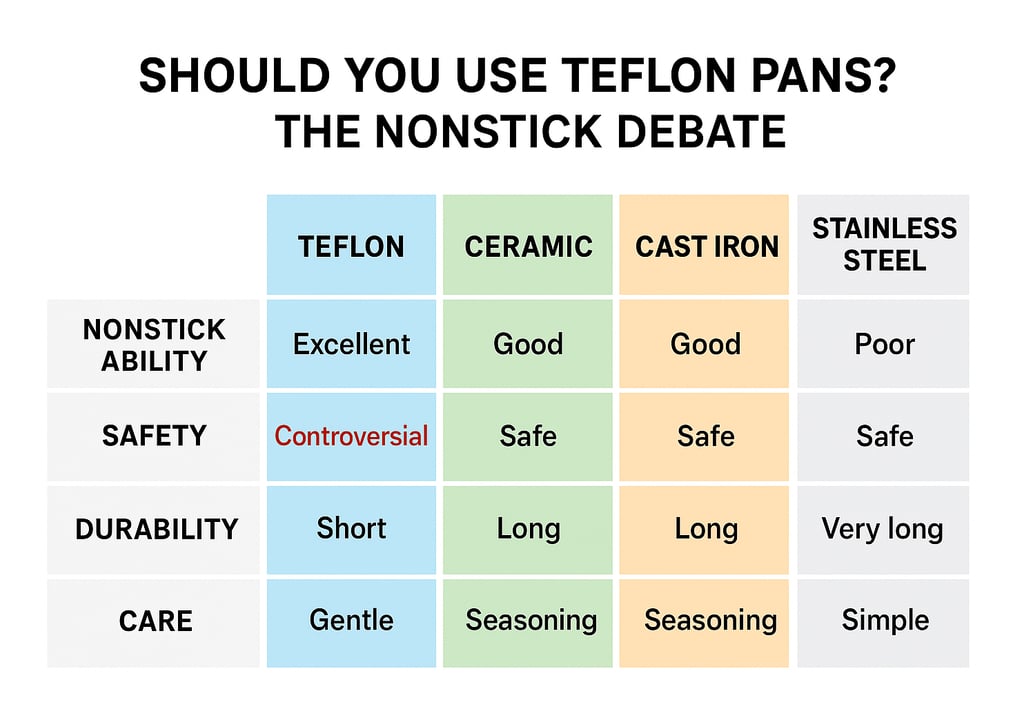
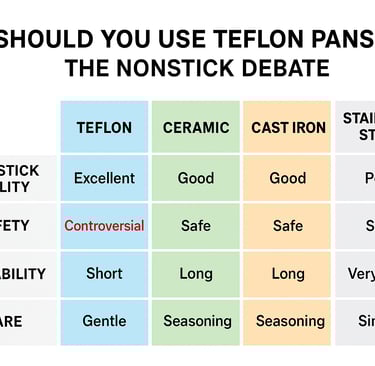
If you’ve ever flipped a pancake or scrambled an egg without it sticking, chances are you were cooking on a Teflon pan. Nonstick cookware has been a kitchen favorite for decades—but it also comes with a fair share of controversy. So, should you keep using Teflon pans, or swap them out for something else? Let’s break it down.
What Exactly Is Teflon?
Teflon is the brand name for a type of nonstick coating made from polytetrafluoroethylene (PTFE). It was invented back in the 1930s and quickly became popular because, well, food just slides right off. No stuck eggs, no scrubbing. Dreamy, right?
Why People Love Teflon Pans
Nonstick magic: Perfect for delicate foods like eggs, fish, or crepes.
Easy cleanup: A quick rinse and wipe, and you’re done.
Less oil needed: Great if you’re trying to cut back on butter or sprays.
Lightweight: Much easier to handle than cast iron or stainless steel.
The Concerns About Teflon
1. High Heat Risk
If Teflon pans get too hot (over ~500°F/260°C), the coating can start to break down and release fumes. While they’re not toxic in small amounts, it’s not something you want filling your kitchen on a regular basis.
2. Scratches & Flakes
Metal utensils or harsh scrubbing can damage the surface. Once the coating is scratched, food starts sticking, and the pan may need replacing.
3. The PFAS Problem
Older Teflon pans (made before 2013) contained PFOA, part of a larger group of chemicals called PFAS (per- and polyfluoroalkyl substances). These are often called “forever chemicals” because they don’t break down in the environment—or in our bodies.
Why PFAS are concerning:
Linked to health risks like hormone disruption, immune system effects, and even certain cancers.
Persistent in the environment, contaminating water and soil.
Build up in the human body over time.
The good news: manufacturers phased out PFOA in cookware by 2013. Modern Teflon pans are PFOA-free. However, PFAS are still used in many consumer products, and scientists are studying long-term safety of other related compounds that replaced PFOA.
Tips for Safe Teflon Use
If you stick with nonstick, here’s how to cook smarter:
Keep heat at medium or low.
Use wooden, silicone, or plastic utensils.
Wash gently—avoid abrasive scrubbing.
Replace your pan if the coating is peeling, scratched, or very old.
Alternatives to Teflon
Want to skip the worry altogether? Try these:
Cast iron: Naturally nonstick when seasoned, great for searing.
Carbon steel: Similar to cast iron but lighter.
Stainless steel: Ideal for browning and durability (with a little more oil).
Ceramic-coated nonstick: A PTFE-free option, though coatings wear out quicker.
Final Thoughts: Should You Use Teflon?
Teflon pans can be safe for everyday cooking if you use them correctly and replace them when worn. But if you’re uneasy about PFAS or prefer cookware that lasts forever, cast iron, stainless steel, or ceramic-coated pans are excellent alternatives.
At the end of the day, a mix of cookware might be best—keep one nonstick pan for eggs and pancakes, and use sturdier, PFAS-free options for everything else.