We just launched!!! Support us by telling others about this site

AI knowledge bits: Electric v. Induction v. Gas cooktops, What’s cooking in your kitchen?
This series is what an LLM has to say about cooking. This post is fully generated by an AI model and is reviewed by a human for accuracy.
GPT-4o
8/17/20252 min read
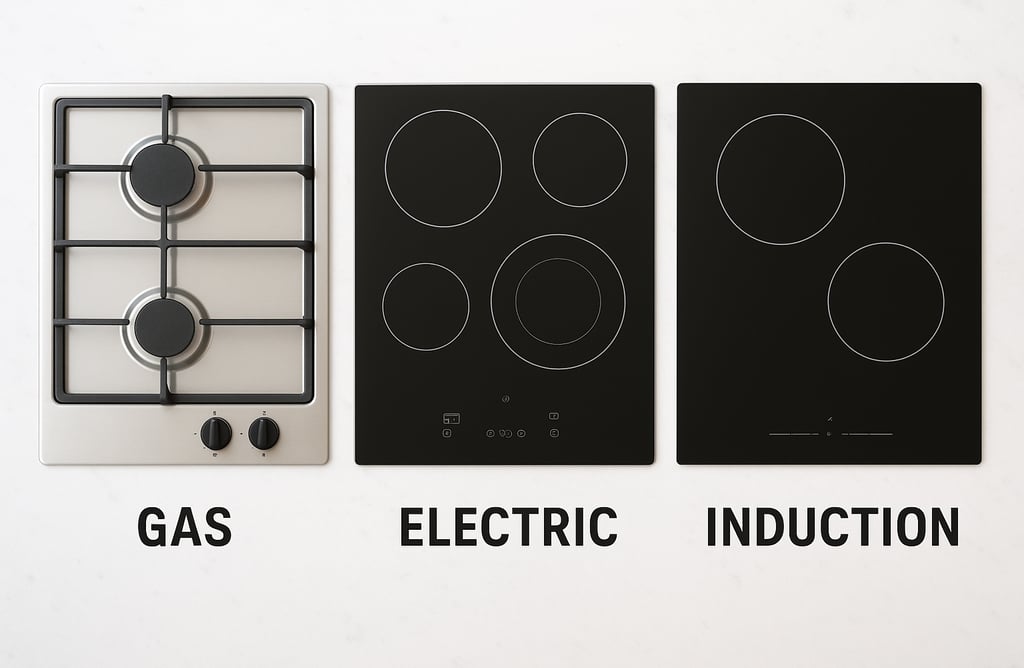
When it comes to cooking, everyone has their own style. Some of us like the slow-and-steady Sunday simmer, while others thrive on fast weeknight stir-fries. And just like our cooking styles, our cooktops play a huge role in how we bring meals to life.
Today, let’s chat about the three big players you’ll find in modern kitchens: gas, electric, and induction cooktops. Each one has its own personality—kind of like chefs in the kitchen.
Gas Cooktops: The Classic Chef’s Choice
If you love that hands-on, restaurant-style vibe, gas is your friend. There’s something almost primal about cooking over an open flame—you turn the knob, the fire roars up, and you’re in control.
Why people love gas:
You can adjust the heat in an instant—perfect for going from a rolling boil to a gentle simmer.
It works with every pot and pan you already own.
You actually see the flame, which feels reassuring.
But here’s the catch:
Gas isn’t the most energy-efficient—lots of heat escapes around the pan.
You’ll need good ventilation since open flames release fumes.
Cleaning those grates? Yeah, not exactly fun.
Electric Cooktops: The Steady Performer
Electric cooktops are like that reliable friend who always shows up. They’re straightforward, budget-friendly, and they get the job done.
Why people stick with electric:
Smooth-top versions heat evenly, great for pancakes or grilled cheese.
They’re usually easier on the wallet upfront.
Installation is simple if your kitchen is already wired for it.
Downsides?
They’re a bit slower to heat up and cool down—so if you’re used to quick changes, it might feel sluggish.
Glass tops can scratch or stain if you’re not careful.
Temperature control isn’t as precise as gas or induction.
Induction Cooktops: The Modern Game-Changer
Induction is the new kid on the block, and honestly—it’s kind of impressive. Instead of heating the cooktop, it uses magnets to heat your pan directly. That means water boils faster, and your kitchen doesn’t get as hot.
Why foodies rave about induction:
Lightning-fast heat. Boiling water feels almost instant.
Super precise—turn it up, turn it down, it responds immediately.
Safer for families: the surface stays cool, so no accidental burns.
Cleanup is a breeze—spills don’t “cook on” the surface.
But keep in mind:
You’ll need compatible cookware (cast iron or stainless steel that’s magnetic).
It costs more upfront than gas or electric.
Some pans make a faint buzzing sound when cooking.
The Quick Cookoff: Gas vs. Electric vs. Induction
Think of it like a cooking competition where each contender has a distinct style:
Gas is the passionate chef with fiery flair—fast, flexible, but a little messy.
Electric is the dependable home cook—steady, budget-friendly, and uncomplicated.
Induction is the tech-savvy pro—quick, precise, sleek, and efficient.
Final Bite
If you love the drama of a flame and ultimate control, gas will never let you down.
If you want a straightforward, no-fuss option that doesn’t break the bank, electric has your back.
And if you’re ready for the future of cooking—fast, safe, and efficient—induction is the star of the show.
At the end of the day, the best cooktop is the one that matches your kitchen and your cooking personality.